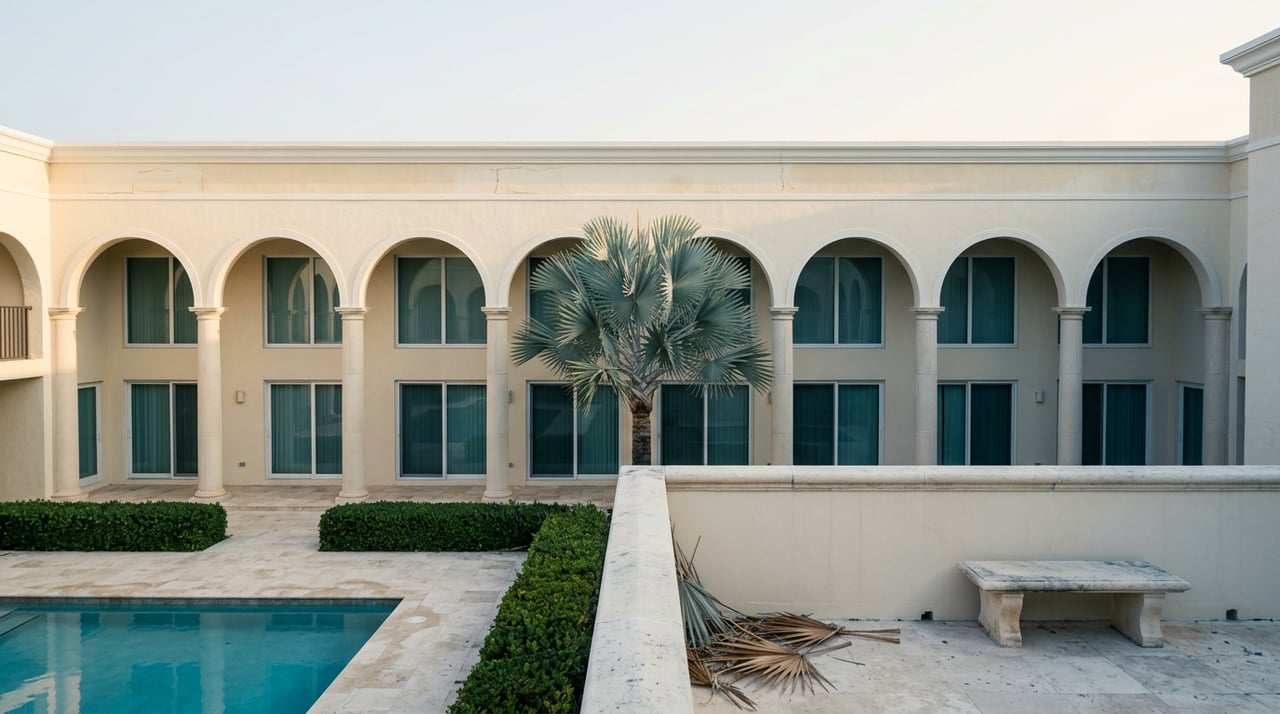
West Palm Beach Condos Have Two Prices. The Second One Shows Up After Closing.
September 24, 2026
September 24, 2026
In the summer of 2025, roughly 140 owners in a West Palm Beach condominium building were handed a choice that had nothing to do with market timing. Sell the unit now, or fund a share of more than a million dollars in structural repairs the building could no longer put off. There was no dramatic failure behind the notice. There was a law that changed what an association was allowed to defer, and a building old enough that deferring had been its entire financial plan.
That story is not an outlier along the Flagler Drive corridor right now. It is the leading edge of a pattern buyers need to understand before they compare a resale unit's price per square foot to one of the new towers rising along the waterfront. The lower number on the older building is not a discount. It is a bill that has not arrived yet, and Florida law now makes sure it eventually does.
Florida's condominium reforms trace back to June 2021, when Champlain Towers South collapsed in Surfside, killing 98 people. An investigation pointed to years of deferred maintenance sitting behind reserve funds that had never been required to keep pace. The legislature responded with reforms commonly referred to as SB 4-D, which put teeth into two separate obligations for condo and co-op buildings three stories or taller: a milestone structural inspection on a set age schedule, and a Structural Integrity Reserve Study, or SIRS, that catalogs major components and forces the association to fund their eventual replacement.
The detail that matters most for a 2026 buyer is the funding rule itself. Under Florida Statute 718.112, for association budgets adopted on or after December 31, 2024, boards generally cannot vote to waive or underfund reserves for SIRS-covered components. That waiver had been the release valve for decades. Boards could vote every year to defer contributions and keep monthly fees flat. That vote is no longer available for the items SIRS identifies, which means any building coming up for its first study now has to show its full number and start paying toward it.
Geography sharpens the timeline further. Palm Beach County follows the statewide rule that puts coastal buildings on a faster clock: within three miles of the coastline, the first milestone inspection is due at 25 years old, compared with 30 years inland. Nearly the entire Flagler Drive condo corridor sits on the Intracoastal, which means buildings from the 1970s through the 1990s are not approaching this threshold. Many have already crossed it and are working through their first SIRS-driven budget under the no-waiver rule.
Set that regulatory reality next to the current sales pitch on the waterfront and the price gap starts to make more sense.
| Building | Status as of late summer 2026 | Published price range |
|---|---|---|
| Mr. C Residences West Palm Beach | Delivering 2026, first move-ins underway | From $1.6 million |
| Olara | Sales ongoing, first tower targeted Q4 2026 | Roughly $1,370 to $2,000 per square foot |
| South Flagler House | Under construction, 2027 delivery | $3.5 million to $20 million |
| The Residences at Mandarin Oriental | Under construction, targeting 2031 completion | Around $3,000 per square foot |
| Ritz-Carlton Residences, West Palm Beach | Under construction | Roughly $2,000 to $3,000 per square foot |
| Older Flagler Drive resale stock | 1970s to 1990s construction, many past milestone age | Entry point closer to $900,000 to $1.5 million per unit |
Seven major towers are in sales or under construction along this corridor as of September 2026, according to a resident tracker following the waterfront pipeline. That volume is exactly why the comparison matters now rather than in a few years. A buyer weighing a $1.5 million resale against a $2 million new-construction unit is not just comparing square footage and finishes. A newly delivered tower starts its SIRS clock at zero. Its first structural inspection is decades away. An older building two blocks down may already be mid-repair, with its reserve study filed and its assessment vote scheduled.
None of this means new construction is automatically the safer purchase. Pre-construction deposits on towers like these typically run 20 to 50 percent of the purchase price in staged payments, tied to contract signing, groundbreaking, and construction milestones, and that money carries its own risk if a project slows. The trade is not risk versus no risk. It is a known, disclosed construction risk on one side against an undisclosed, deferred maintenance risk on the other, and only one of those two risks shows up in the closing documents unless the buyer specifically asks for it.
A special assessment on an older Flagler Drive building can run anywhere from a few thousand dollars per unit for a modest capital project to well into six figures for a full concrete and waterproofing rebuild, depending on the scope the milestone inspection uncovers. Monthly HOA dues in the downtown corridor's established buildings commonly run $400 to $900, a figure that looks reasonable next to a new tower's amenity-driven fee, until a special assessment resets the comparison in a single vote.
Reserve-study professionals treat a fund above 70 percent of its target as strong. Below 30 percent is considered at risk. Below 10 percent is treated as an almost certain trigger for a special assessment.
That benchmark is why the reserve study, not the listing price, is the document that actually prices the unit. A building can look identical to its neighbor on a walkthrough and carry a completely different financial exposure depending on where its reserve account sits against that scale.
Before comparing a resale unit to new construction on price per square foot alone, request:
A lender may ask for some of this anyway if the building's reserve position affects loan eligibility. Getting there first gives a buyer negotiating room instead of a surprise at underwriting.
Most of the families and riders we work with are focused on Wellington, not the Flagler corridor. But the downtown condo conversation comes up more than people expect, usually from a seasonal client who wants a low-maintenance base during the winter circuit without taking on a second property to manage, or from a family whose children have aged out of active competition and are weighing a smaller footprint that still keeps them close to the show grounds and the airport. For that buyer, the reserve study question is not a technicality. It is the difference between a condo that behaves like a turnkey second home and one that behaves like a second mortgage with a delayed due date.
The West Palm Beach waterfront is not a market to avoid. It is a market where the visible price and the real price can diverge by a wide margin, and where the paperwork that closes that gap is available to anyone who asks for it before the ink dries rather than after the special assessment notice arrives.
Does a lower monthly HOA fee always mean lower total ownership cost? Not on its own. A lower fee can mean a building has kept contributions to its reserve fund artificially low for years, which increases the odds of a large special assessment once its SIRS-required funding can no longer be waived.
Is new construction automatically the safer choice? It removes near-term structural and milestone risk since the building starts fresh, but it introduces construction and delivery risk instead, along with staged deposits paid years before the unit is ready to occupy.
How can I check a building's milestone inspection and reserve status before making an offer? Request the SIRS report, the most recent reserve study, board meeting minutes, and the estoppel certificate directly from the seller or association. Florida law entitles owners and prospective buyers to see these records, and a completed SIRS with fully funded structural line items is the clearest signal of low near-term assessment risk.
If you are weighing a Wellington farm, a seasonal condo along the waterfront, or both, Martha's Properties can walk through the reserve position, the milestone timeline, and the real total cost of any property you are considering before you write an offer. Request Private Listing Access & Consultation to start that conversation.
Stay up to date on the latest real estate trends.


Whether working with buyers or sellers, Martha provides outstanding professionalism into making her client’s real estate dreams a reality. Contact her today for a free consultation for buying, selling, renting, or investing in Florida.
Get in Touch With Martha Team to Learn More

MARTHA W. JOLICOEUR PA
✉ EMAIL:
✆ TELEPHONE NUMBER:
⚲ ADDRESS: 13501 SOUTH SHORE BLVD STE 102 WELLINGTON FL 33414