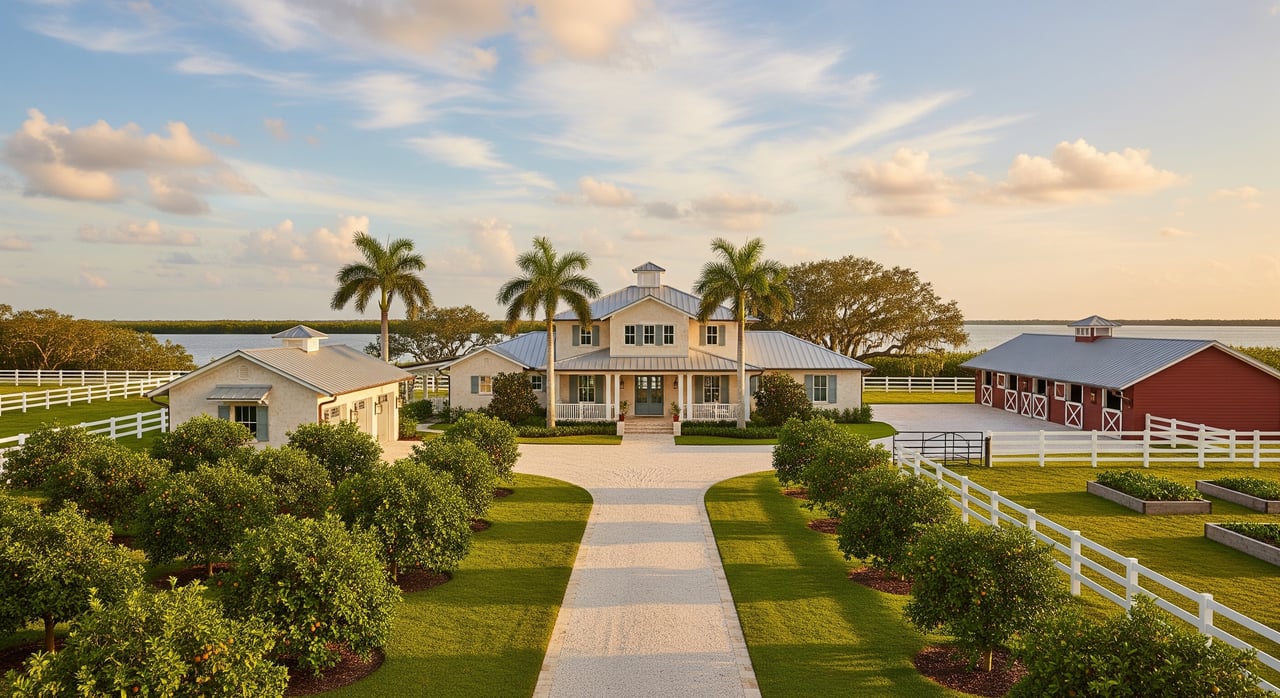
Palm Beach Point vs Loxahatchee Groves Equestrian Farms
February 5, 2026
February 5, 2026
Are you weighing Palm Beach Point against Loxahatchee Groves for your next farm near Wellington and WEF? If you compete, train, or manage a string, you know the land has to work as hard as you do. You need stalls and turnout that stay dry, footing that holds up, and a haul that does not drain your day. In this guide, you will compare acreage, zoning, drainage, WEF logistics, operating costs, and resale dynamics so you can choose with confidence. Let’s dive in.
When you evaluate a horse property, look at usable acreage, not just the number on the listing. Confirm flood‑impacted zones, recorded easements, and setbacks that could shrink your buildable area. A site that offers a rectangular training core with smart paddock placement usually rides friendlier than a larger but fragmented parcel.
Loxahatchee Groves is predominantly rural, with many properties ranging from small acreages to larger estate tracts. Parcels are often configured for barns, arenas, and paddocks with access to quieter roads. Palm Beach Point parcels can be 1 acre or more and often skew smaller and more improved if they sit closer to Wellington’s core. Always verify neighborhood boundaries and parcel IDs through county records so your comps match the exact area you care about.
Zoning drives what you can build, where you can place it, and how you can use it. In Loxahatchee Groves, town codes emphasize low‑density agricultural uses with town‑specific rules for livestock and rural land use. Palm Beach County governs many properties in and around Palm Beach Point, which means county zoning and permitting rules apply. Requirements can be stricter near preserved wetlands or drainage canals.
Before you write an offer, confirm the current zoning district, permitted equestrian or commercial uses, animal counts per acre, and setbacks for barns and manure management. Pull building permit history for stables, arenas, septic, and wells to verify that key improvements were properly approved.
Barn operations depend on utilities, drainage, and access. Rural Loxahatchee Groves parcels often rely on septic and wells, which can work well when engineered correctly but require attention to soils and percolation. You may need an engineered arena base and thoughtful swale placement to move water efficiently.
Palm Beach Point properties closer to Wellington may offer more robust infrastructure in parts, including paved roads and, in some areas, municipal services. Even so, shallow flood zones can exist depending on elevation and canal proximity. Review FEMA flood maps, South Florida Water Management District records, county drainage notes, and the USDA NRCS soil survey to understand load‑bearing characteristics and drainage behavior.
Travel time is more than a number on a map during show season. Consider peak‑hour traffic, early morning ring times, late‑night returns, and the need to shuttle staff and supplies. Properties that sit closer to PBIEC often reduce daily friction for trainers, riders, and grooms. In exchange, you may be working with a smaller footprint.
Loxahatchee Groves can be an excellent base for private training, with more on‑site capacity and flexibility, but plan your haul‑in routine, trailer parking, and staff schedules with show week traffic in mind. Confirm current haul‑in procedures and any on‑grounds stabling plans that affect your daily rhythm.
You will want quick access to vets, farriers, feed and bedding, and transporters. Areas nearest Wellington and PBIEC can offer shorter response times and an established ecosystem of equine services. Loxahatchee Groves supports many high‑functioning private facilities with on‑site training options, which can reduce day‑to‑day travel but may require more planning for show commuting.
Community character and rules shape your program’s flexibility. Loxahatchee Groves is historically more rural with fewer restrictive HOA rules, though you must follow town ordinances. Closer‑in equestrian subdivisions may include covenants that guide architecture, stable operations, and on‑site activities to maintain neighborhood standards.
Always request recorded covenants and HOA documents. Verify any limits on boarding, on‑site trainers, event hosting, and operating hours before you proceed.
Carry costs vary by utilities, elevation, construction type, and storm exposure. Agricultural property tax classifications can reduce taxes when you meet the county’s bona fide agricultural requirements. Requirements, documentation, and thresholds are county specific, so confirm rules with the Palm Beach County Property Appraiser.
Insurance premiums for wind, hurricane, and flood depend on the FEMA flood zone, roof and structural details, elevation, and loss history. Ask local brokers for quotes early in your process so you understand the true carrying costs of each property.
Resale dynamics follow buyer demand. Properties closer to WEF tend to attract competitors who value time savings, while larger acreage in Loxahatchee Groves often appeals to private owners and trainers who prioritize on‑site training space and privacy. Liquidity can vary by season and by how well a farm’s layout supports horses in wet months.
When you run comps, confirm you are using the correct neighborhood name in MLS and county records. For Palm Beach Point, align your search with the county parcel database so your pricing and timing expectations reflect the exact enclave you intend to buy in.
Deciding between Palm Beach Point and Loxahatchee Groves comes down to how you train, how you show, and how your operation moves through a long season. You deserve a partner who understands barns, footing, drainage, and the show‑circuit lifestyle as well as contracts and closing. If you want discreet guidance, on‑point comps, and access to private opportunities, connect with Martha W. Jolicoeur PA for a tailored plan. Request Private Listing Access & Consultation.
Stay up to date on the latest real estate trends.


Whether working with buyers or sellers, Martha provides outstanding professionalism into making her client’s real estate dreams a reality. Contact her today for a free consultation for buying, selling, renting, or investing in Florida.
Get in Touch With Martha Team to Learn More

MARTHA W. JOLICOEUR PA
✉ EMAIL:
✆ TELEPHONE NUMBER:
⚲ ADDRESS: 13501 SOUTH SHORE BLVD STE 102 WELLINGTON FL 33414