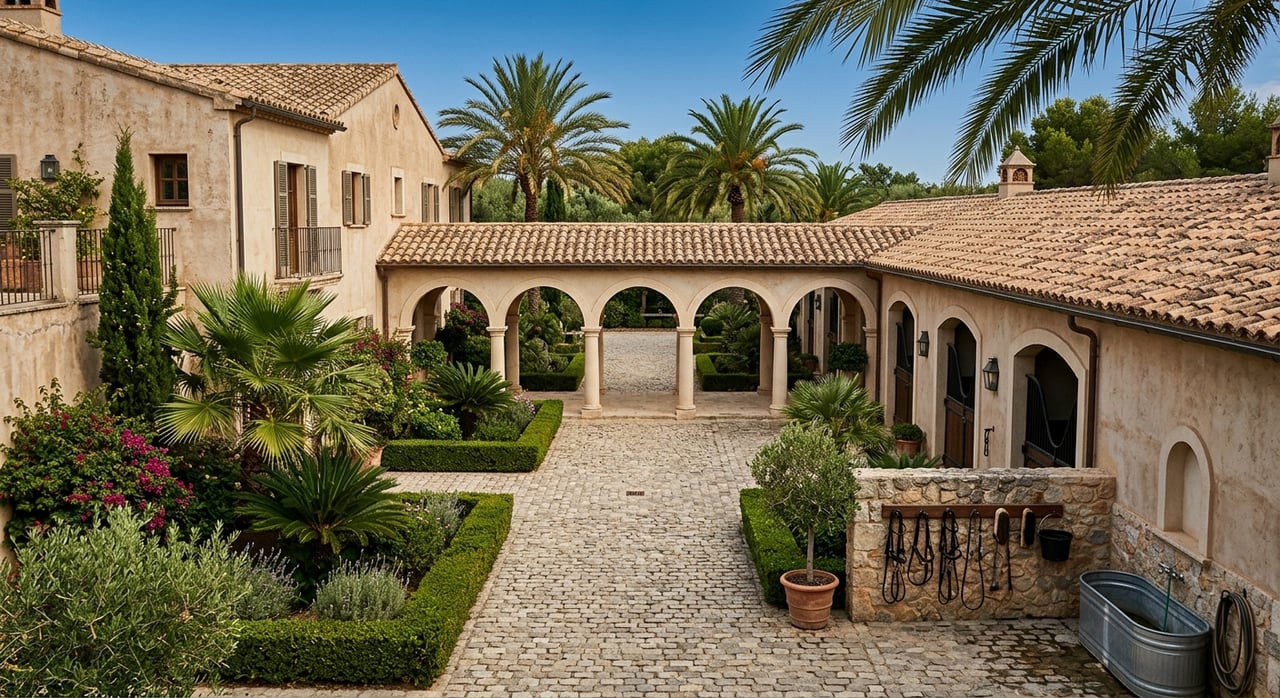
Your Loxahatchee Equestrian Properties Guide for First Farms
May 7, 2026
May 7, 2026
If Wellington feels like the obvious place to start your farm search, Loxahatchee may be the market that deserves a closer look first. Many first-time farm buyers want usable land, room for horses, and a price point that leaves space for improvements, but they do not always need the most centralized show-season setting on day one. If you are weighing value, acreage, and day-to-day practicality in western Palm Beach County, this guide will help you decide whether Loxahatchee is the right fit for your first farm. Let’s dive in.
Loxahatchee often appeals to buyers who want a more accessible entry point into the western Palm Beach County horse corridor. Recent market snapshots place the median listing home price in Loxahatchee around $755,000, compared with about $877,000 in Wellington. That does not mean every farm in Loxahatchee is inexpensive, but it does support the idea that the area can offer a lower general starting point.
That difference matters when you are buying your first farm. In many cases, you are not just purchasing a house with land. You are also budgeting for fencing, barn updates, drainage work, footing, equipment storage, water access, and the daily realities of running a horse property.
One of the biggest mistakes first-time buyers make is treating Loxahatchee like one uniform market. In practice, the name often covers a broader western Palm Beach County rural corridor with very different property types and lot patterns. That matters because your experience can change a lot depending on where you buy.
Palm Beach County materials show that The Acreage has long been associated with 1.25-acre density. For some first-farm buyers, that can be enough for a modest setup, especially if you are starting small and prioritizing flexibility over a full competition farm layout. It can be a practical place to look if your goal is land with fewer urban constraints, but not necessarily a large-scale equestrian property.
The Town of Loxahatchee Groves is a distinct rural municipality, and county planning materials note that five-acre parcels predominate there. Most residences sit on five-acre lots. For many buyers, that lot size feels much closer to a true farm starting point because it gives you more room to think about turnout, barn placement, riding space, access lanes, and future improvements.
Wellington’s equestrian core serves a different purpose. Village materials describe a 9,000-acre Equestrian Preserve Area with more than 580 farms, and horse farms there commonly range from 1 acre to 200 acres, with 2- and 5-acre properties among the most common sizes. In other words, Wellington absolutely offers equestrian property, but its core farm product is more specialized and more closely tied to a concentrated competition environment.
A lower median list price can make Loxahatchee look like an easy answer, but first-farm value depends on more than the asking price. The real question is how much usable property you are getting and what it will take to make that property work for your goals.
When comparing options, pay close attention to:
A property that looks less expensive upfront can still require meaningful investment after closing. On the other hand, a simpler farm in Loxahatchee may give you the room to build gradually in a way that feels harder to achieve in a more tightly defined equestrian setting.
For many buyers, the biggest difference between Loxahatchee and core Wellington is not style. It is infrastructure. If you want a more rural setting, you should expect a more self-directed ownership experience.
The Loxahatchee Groves Water Control District says it manages drainage, road rights-of-way and easements, stormwater management, and water and sewer services. It also describes about 29 miles of unpaved roads and 30 miles of canals across roughly 8,000 acres. The town also says it manages more than 50 miles of public roads and is prioritizing paving, drainage improvements, and canal stabilization.
That context is important for a first-farm buyer. A property here may offer privacy and space, but it may also require more planning around road conditions, drainage performance, service access, and maintenance routines. Palm Beach County also notes that the Rural Service Area does not receive services at the same intensity as the Urban Service Area.
One reason buyers are drawn to this corridor is the possibility of adding or adapting farm infrastructure over time. Palm Beach County’s agricultural-improvements guidance says that nonresidential farm buildings, farm fences, and farm signs on bona fide agricultural land can be exempt from the Florida Building Code and local fees, except for floodplain-related rules. The county lists barns, greenhouses, farm offices, storage buildings, and poultry houses among examples of qualifying nonresidential farm structures.
For a first-farm buyer, that can be meaningful. It suggests a level of flexibility that may support phased improvements as your needs grow. Still, it is not a free pass, because floodplain requirements and local land-use review can still matter depending on the property and the work you plan to do.
Buying your first farm means thinking beyond bedrooms and finishes. In a rural property search, some of the most important questions are not glamorous, but they can shape your budget and your daily routine from the start.
County code notes that in rural subdivisions, septic tanks and individual wells can be acceptable where permitted. That makes due diligence especially important, because water source, septic capacity, drainage, and site layout all play a role in how comfortably a farm can function.
In Loxahatchee Groves, livestock-waste rules are also specific. The town requires manure handling within set hours, prohibits piling, requires spreading within 72 hours, and imposes setbacks from property lines and private or community wells. For a first-time buyer, that is a reminder that owning acreage also means managing it responsibly from day one.
Loxahatchee and Wellington are close in geography, but they serve different priorities. If your top goal is space, privacy, and a more rural setting, Loxahatchee often makes a strong case. If your top goal is concentrated equestrian infrastructure and immediate connection to the heart of the show circuit, Wellington may still be the better fit.
Wellington’s official materials describe more than 100 miles of public and private bridle trails in its equestrian community. The village also budgets annually for trail maintenance and improvements, which reflects a more centralized and institutionally supported riding environment. Wellington International’s Winter Equestrian Festival also runs 13 weeks from January through March, reinforcing Wellington’s role as the region’s competition hub.
Wellington is also more rule-defined. Its Equestrian Overlay Zoning District ties stable allowances to lot size, and larger properties may still be subject to permit approval and other development standards. That framework can be helpful for buyers who want a highly established equestrian setting, but it is different from the more agricultural path some buyers seek in Loxahatchee.
Loxahatchee may be the right entry point if you want to build your farm life gradually instead of buying into a fully built, highly structured equestrian environment from the beginning. It can be a smart fit if you are comfortable taking a more active role in property management and want your budget to stretch further on land.
You may want to focus your search here if you value:
Wellington may be the better first-farm choice if your priorities are closely tied to showing, training, and daily access to the area’s most concentrated equestrian infrastructure. Buyers who want an established network of farms, trails, and competition venues often prefer that environment despite the higher general price baseline.
You may lean toward Wellington if you want:
The best first-farm decision is rarely about the town name alone. It comes down to how you plan to live on the property, how much land you actually need, and how comfortable you are managing the practical side of a rural farm.
Start by asking yourself a few direct questions:
For many buyers, Loxahatchee is the right answer precisely because it is not trying to be Wellington. It offers a different kind of beginning, one that can make a first farm more attainable, more flexible, and more personal.
If you are weighing Loxahatchee against Wellington, the most helpful next step is a property-level review rather than a broad market assumption. The right guidance can help you compare lot utility, barn potential, access, and long-term fit with much more clarity. To explore equestrian properties with local insight and discreet, high-touch service, connect with Martha W. Jolicoeur PA.
Stay up to date on the latest real estate trends.


Whether working with buyers or sellers, Martha provides outstanding professionalism into making her client’s real estate dreams a reality. Contact her today for a free consultation for buying, selling, renting, or investing in Florida.
Get in Touch With Martha Team to Learn More

MARTHA W. JOLICOEUR PA
✉ EMAIL:
✆ TELEPHONE NUMBER:
⚲ ADDRESS: 13501 SOUTH SHORE BLVD STE 102 WELLINGTON FL 33414