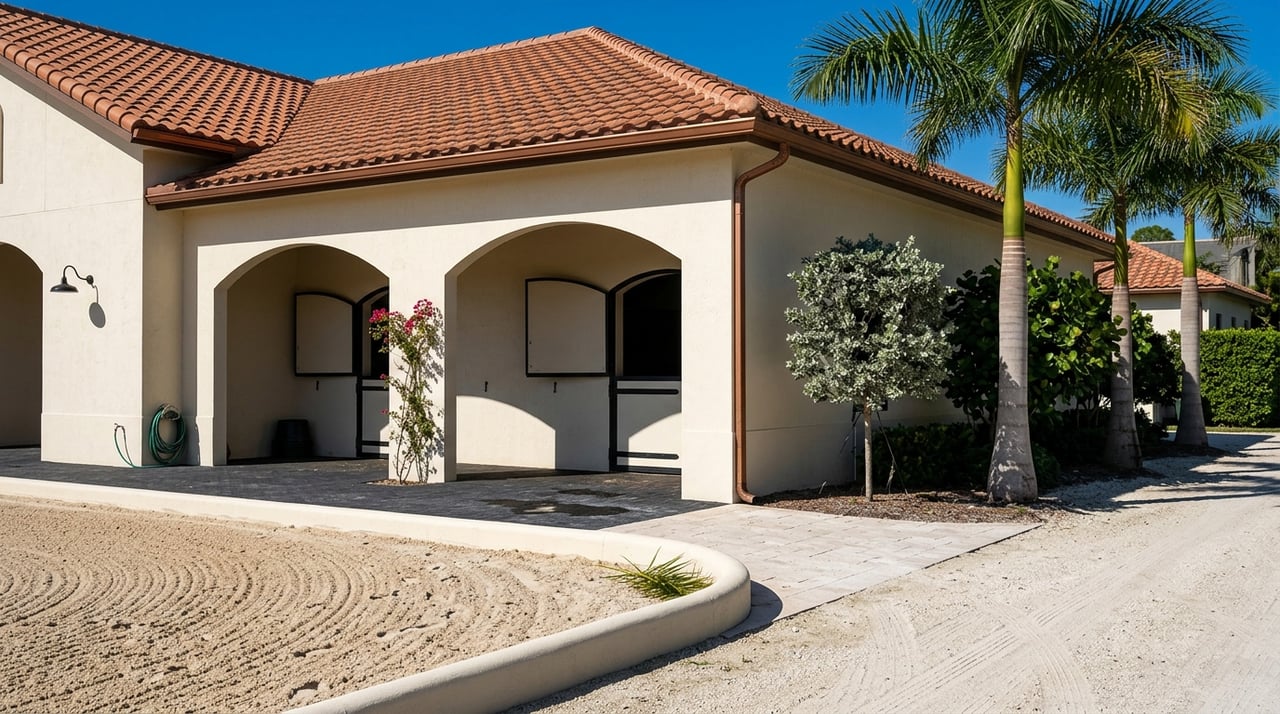
How to Sell a Palm Beach Point Farm With Confidence
June 25, 2026
June 25, 2026
Selling a farm in Palm Beach Point is not like selling a standard luxury home. You are presenting a full equestrian property package in one of Wellington’s most specialized markets, and buyers tend to look far beyond finishes and square footage. If you want to sell with confidence, it helps to prepare the property, records, and pricing story with the same care you would bring to the farm itself. Let’s dive in.
Palm Beach Point is a gated equestrian community in Wellington with large lots and a strong connection to the area’s horse-focused lifestyle. The community sits on more than 800 acres and has a minimum lot size of 5 acres, which immediately sets it apart from a typical residential neighborhood.
Wellington’s official planning framework also matters here. The village describes its equestrian preserve area as a large, trail-connected part of the community, shaped by equestrian land use, preserve planning, and local regulation. A practical way to think about Palm Beach Point is this: buyers are not just purchasing a home, they are evaluating a property inside a highly specific Wellington equestrian market.
That distinction affects everything from pricing to marketing. Proximity to Wellington International, the National Polo Center, Palm Beach International Airport, Worth Avenue, and the beaches can support buyer interest, but the farm’s day-to-day functionality is often just as important.
Confidence starts with preparation. In Palm Beach Point, visible condition issues can raise questions about maintenance, compliance, and the overall ease of ownership.
Fences, walls, and hedges deserve early attention. Wellington’s guidance notes that repairs or replacements affecting more than 30% of a fence, wall, or hedge must comply with land development regulations, and a building permit is required when fence or wall damage exceeds 20% of a section.
That means cosmetic touch-ups are not always simple on a large equestrian property. If your perimeter fencing, entry features, or hedges need meaningful work, it is wise to address that early, before photography, showings, and buyer inspections begin.
Functional farm systems matter. Wellington and the Acme Improvement District state that livestock waste must be stored in an approved waste area with containment and setback standards, removed by approved or registered haulers, and kept away from water bodies, wells, and drainage conveyances.
The village also notes that private drainage systems are the responsibility of property owners and associations. If your farm has standing water, clogged swales, worn drainage features, or an underperforming waste-storage setup, those issues should be handled before you go to market.
If you intend to repair stalls, fences, walls, or other structures before listing, timing matters. Wellington’s Building Department processes permits electronically and requires plans to move through ProjectDox.
In other words, pre-listing repairs may involve more lead time than sellers expect. A rushed approach can delay your launch, while an early plan helps you present the property in a cleaner and more credible way.
One of the smartest ways to sell a Palm Beach Point farm with confidence is to make the buyer’s review process easier. Well-organized records support value, reduce uncertainty, and help the transaction move more smoothly.
Palm Beach County’s Property Appraiser GIS is a useful starting point because it tracks official map and ownership records and assigns each parcel a unique PCN. The system also includes a wide range of parcel-level data, such as owner names, zoning, sale date, square footage, price, and property tax paid.
For recorded matters, the Clerk of the Circuit Court’s official records database is the place to verify deeds, liens, mortgages, plats, and tax deeds. For sellers, the practical takeaway is simple: assemble your file before the property hits the market.
Your file should include items that help explain how the farm works and what affects its use. That often means gathering:
In a specialized equestrian sale, documentation is not just a formality. It is part of the property presentation.
Palm Beach Point sellers should also understand how the property is classified and assessed. This step can shape buyer questions and your own expectations as you plan the sale.
If your property has an agricultural classification, Palm Beach County says it applies only to bona fide commercial agricultural use. The county also notes that applications are filed from January 1 to March 1, and losing the classification can materially change assessed value.
That can be a major point in a farm sale. Buyers may want clarity on the current status, how the property has been used, and what that could mean going forward.
Palm Beach County makes an important distinction between market value and assessed value. Market value is the estimate of what a property would sell for, while assessed value may be capped for tax purposes depending on homestead or non-homestead status.
If the home is homesteaded, a sale can reset assessed value, and the Save Our Homes cap is generally 3% for homesteaded property and 10% for non-homestead property. For sellers, this means tax history should not be confused with likely market pricing.
Pricing a Palm Beach Point farm requires more than comparing luxury homes by interior finish level. The property needs to be evaluated as a specialized equestrian asset.
Palm Beach County’s February 2026 market report showed total home sales up 9% year over year, single-family median sale price at $675,000, single-family inventory at 4.9 months, a 94% median original list-price received, and 54.9% cash sales. In Wellington, MIAMI REALTORS’ Q1 2026 luxury report placed the single-family luxury threshold at $4.2 million and the ultra-luxury threshold at $13.0 million.
Those numbers provide useful context, but they do not tell the whole story for Palm Beach Point. A farm’s value may hinge on acreage, barn quality, ring footing, drainage, storage, paddock configuration, ride-out convenience, and the completeness of its documentation.
A beautiful residence helps, but equestrian buyers often assess the property as an operating environment. They may focus on whether the barn layout supports daily routines, whether the ring and footing appear ready for use, and whether the property shows signs of thoughtful maintenance.
That is why pricing should reflect the whole package. If two properties have similar homes but one offers stronger equestrian utility and cleaner records, buyers may view them very differently.
The right marketing approach can make a meaningful difference in Palm Beach Point. Buyers in this segment are often evaluating both lifestyle and logistics at the same time.
Palm Beach Point’s own community positioning emphasizes features that matter to horse buyers, including show-season proximity, trail access, and convenience to the airport and nearby destinations. Wellington’s official pages reinforce that the village’s identity is tied to equestrian use, trail maintenance, drainage, and preserve planning.
That gives sellers a clear framework. Your farm should be presented as a coordinated package that includes the house, barn, paddocks, footing, drainage, storage, and supporting records.
Strong marketing is not just about attractive photography. It should also reduce friction by helping buyers understand how the property functions.
That means your marketing story should clearly communicate:
In a luxury equestrian market, polished presentation and practical clarity work best together.
Palm Beach Point buyers are often sophisticated, time-sensitive, and highly focused on fit. They may arrive with a clear checklist and little patience for uncertainty.
When your property is well prepared, properly documented, and thoughtfully positioned, you create a more confident experience for everyone involved. You also improve your chances of attracting serious interest from buyers who understand the value of a well-run Wellington farm.
Selling with confidence usually comes down to four core steps: fix visible compliance issues, assemble permits and recorded documents, verify tax or classification status, and price based on true equestrian utility. When those pieces come together, your farm is easier to understand, easier to show, and easier to trust.
If you are thinking about selling a Palm Beach Point farm, a discreet, technically informed strategy can make all the difference. For private guidance tailored to Wellington’s equestrian market, connect with Martha W. Jolicoeur PA.
Stay up to date on the latest real estate trends.
Whether working with buyers or sellers, Martha provides outstanding professionalism into making her client’s real estate dreams a reality. Contact her today for a free consultation for buying, selling, renting, or investing in Florida.
Get in Touch With Martha Team to Learn More

MARTHA W. JOLICOEUR PA
✉ EMAIL:
✆ TELEPHONE NUMBER:
⚲ ADDRESS: 13501 SOUTH SHORE BLVD STE 102 WELLINGTON FL 33414